
Malaria
Malaria is a very serious and potentially fatal disease caused by a parasite that invades human-feeding mosquito. Common symptoms include fever, excretion problems, headaches and muscle aches and pains.
ABCD of Malaria Prevention
A – Awareness of the Risk
What causes malaria and how common is malaria infection?
Malaria is caused by a type of Plasmodium parasite that infects red blood cells, with the parasite being transmitted by the Anopheles mosquito.
According to the World Health Organisation:
- Over 250 million cases have been reported yearly in 2022 with an estimated 600,000 deaths
- 95% of cases and deaths are reported in Africa
- 2/3 of this total are in children under 5 years old
Can it affect British travellers?
- In 2019, there were 1,719 cases of malaria imported into UK with 15 deaths. However, there is a huge issue of underrepresentation, with a PHS report citing only 56% of cases have been captured
- 85.8% of these cases came from Plasmidium falciparum
- 87% of people who had died had not taken chemoprophylaxis
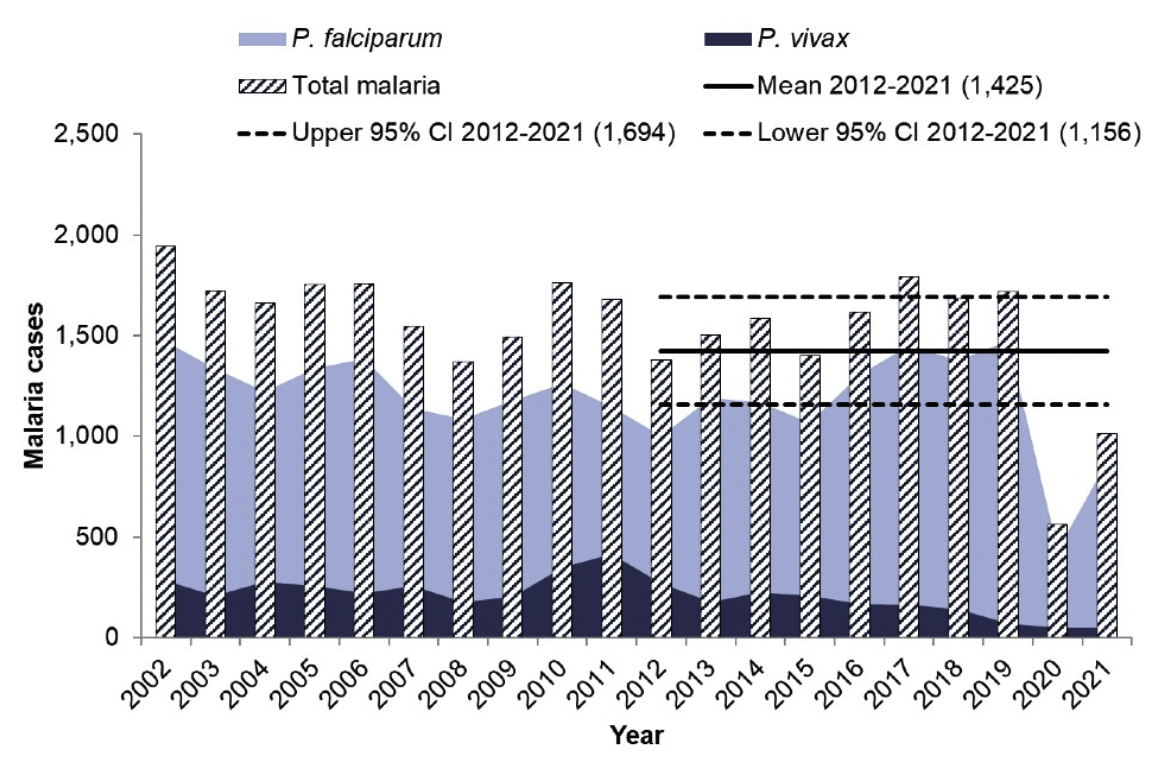
Image taken from https://www.gov.uk/government/publications/malaria-in-the-uk-annual-report/malaria-imported-into-the-uk-2021.
UK travellers at the highest risk of infection
- Decide not to take, takes incorrect or does not complete antimalerial medication
- Unaware of malaria risk so do not seek advice from trained professionals
Risk factors one must consider when making their risk assessment for malaria
- Temperature, altitude and season
- Rural versus urban location
- Type of accommodation
- Length of stay
- Drug resistant P. falciparum strains
B – Bite Prevention
The most effective way to prevent malaria infection is by not allowing mosquito biting.
A prevalent way of achieving this is can be through the use of insect repellant:
- DEET is an insect repelant and is strongly recommended by Malaria guidelines (2021)
- Also known as N,N-diethyl-m-toluamide and has been used as insect repellant for over 60 years
- Longest protection length of any repellant (needs reapplying every 2-3 hours in very humid and hot conditions)
- Can be used anyone over the age of 2 months
- However DEET has negative effects after excessive use and some people are allergic. Negative effects include seizures, uncoordinated movements, agitation, aggression and skin irritation
- Alternative, less invasive options include: Picaridin/Icaridin and Eucalyptus
Citrodora
Other bite avoidance methods include:
- Mosquito nets; prevents mosquitoes entering or biting through, long lasting nets last 3-5 years
- Minimising accessibility to skin; this invludes wearing loose fitting, long-sleeves and trousers, even more effective if DEET or permethrin is impregnated on the outside
- Room protection; Use air conditioning, fans, mesh door, knockdown spray, plugin vaporisers and mosquito coils
More information on bite avoidance can be found on the government website.
C – Chemoprophylaxis
Chemoprophylaxis is the administration of a medication for the purpose of preventing incidence of disease
Medication is taken before, during and after the trip to kill malaria parasites if contracted whilst away
Main medication options:
- Doxycycline – an antibiotic used to treat chest, dental and skin infections
- Lariam – A specific anti-malaria medicine often taken as a tablet to prevent Plasmodium replication in the red blood cells
- Atovaquone & Proguanil – antimalarial mediciations that kill the Plasmodium parasites
- Chloroquine – builds up toxic substances within the parasite, eventually leading to their death
How to decide which malaria medication to administer:
- Potential risks (side effects)
- Drug availability
- You must discuss pros and cons of suitable medications to help the patient make an informed decision
Medication Profiles
Doxycycline:
- Course: 1 capsule daily starting 1-2 days before, every day
during trip and 4 weeks after - How to be safe taking it: take with food, plenty of
water, upright 30 minutes, limit sun exposure, thrush - Who can not take the medication: child under 12, pregnancy*,
breastfeeding, allergy to tetracycline - *Do not take with oral typhoid tablets*
Mefloquine (lariam):
- Course: Weekly tablet, starting 2-3 weeks before, weekly
during trip and 4 weeks after, *3-week trial recommended first time* - How to be safe taking it: Requires careful risk assessment due to possible
neuropsychiatric problems - Who can not take the medication: current or previous history of
depression, neuropsychiatric disorders, epilepsy and those with heart issues - Possible side effects: nightmares, insomnia, anxiety,
depressed mood, confusion. - *Do not prescribe to pilots or scuba divers*
Atovaquone & Proguanil:
- 1 tablet daily, starting 1-2 days before, every day during trip and 7 days after
- Who can not take the medication: Those on HIV medication, tetracyclines and metoclopramide
- Common side effects: headaches, GI upset. Occasionally abnormal dreams
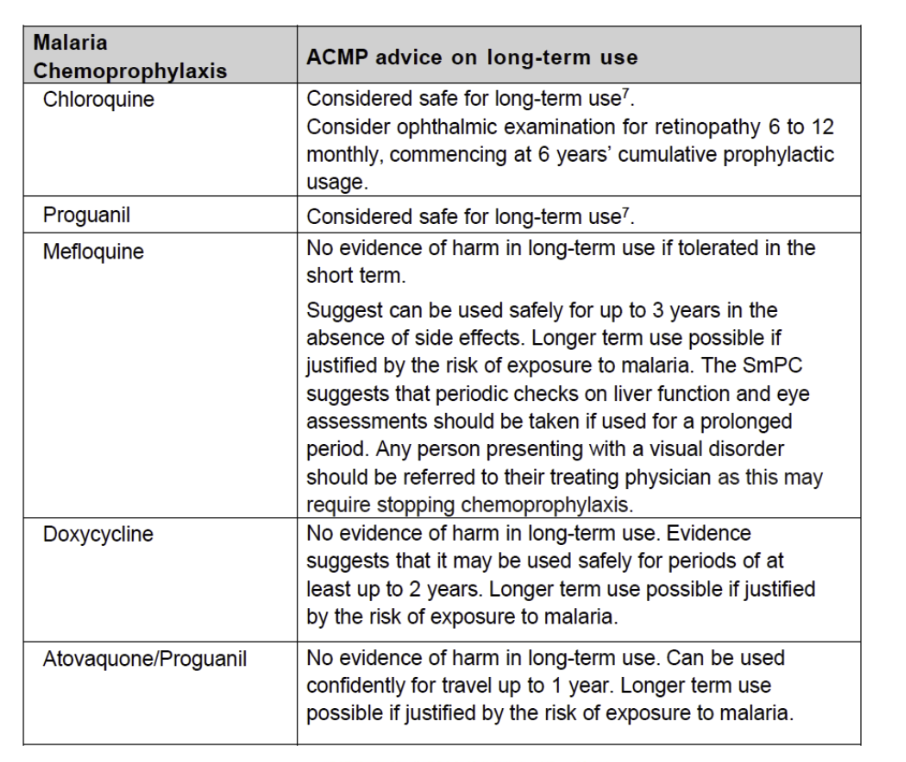
Long term use:
When to administer medication
Always use a malaria map to make an informed decision on when to administer medication
- There is risk of P.falciparum and P. vivax infection at all times of the year, however in many regions the risk is so low that it should only be administered to those of high risk i.e. >70 years old, long term travellers visiting friendsfamily, immunosuppressed, pregnant women and young children.
- When someone is at too much risk i.e. poor splenic function or completely immunocompromised, travel should be strongly advised against.
- In high risk areas atovaquone/proguanil OR doxycycline OR mefloquine is advised
- In low risk areas atovaquone/proguanil OR doxycycline OR mefloquine is advised only for those at high risk
- In low to no risk areas medications are not advised due to potential adverse effects
- *Always check dosage before administration*
D – Diagnosis and Treatment
- SUSPECTED MALARIA IS A MEDICAL EMERGENCY
- Patients must report any flu like symptoms promptly and must inform clinician of their travel
to a malarial area - Symptoms: Can be non-specific and ‘flu-like. They also commonly do not appear until at least 8 days after arrival into the malarial region
- Malaria can only be confirmed via a blood test
Complex Cases
Complex cases when dealing with malaria infection include those who are pregnant, young children and have Sickle Cell Anaemia
For those who are pregnant you must ask:
- Is the trip necessary?
- What trimester is the mother currently on?
- Are their ante-natal notes easily accessible?
Medications in Pregancy:
- Mefloquine is the first choice but risk assessments are vital
- Doxycycline can also be used up to 15 weeks gestation
- A&P should ideally be avoided in pregnancy but can be used in 2nd & 3rd trimesters if no alternative available.
- Needs 5mg Folate supplement
Child Travellers:
- Children are especially viable to Malaria through not taking precautions to avoid infection
- When prescribing drugs, children must be weighed to ensure correct dosage is given
- Exact dose will be provided on the manufacturers website
Sickle Cell Anaemic:
- SCA confers a level of protection against maleria, but NEVERTHELESS, patients still require chemophrophylaxis
Useful Recourses about Malaria
- Large areas of Africa and South Asia and parts of Central and South America, the Caribbean, Southeast Asia, the Middle East, and Oceania
- Databases like NaTHNaC have interactive searchable malaria maps and general information for countries with a risk of malaria infection
*Always check malaria maps when patients are travelling to at risk countries*
- Travax has an in depth document describing the malaria risk level to travellers
- UK HSA also has a useful document outlining how to prevent malaria whilst travelling
Further information on malaria:
- Jane Chiodini has a free e-learning course specifically on malaria
- CDC have anecdotal experiences on dealing with malaria